Author Archives: Leith Central Community Council

Leith Improvement Programme Consultation – LCCC Joins Forces With 10 Other Organisations


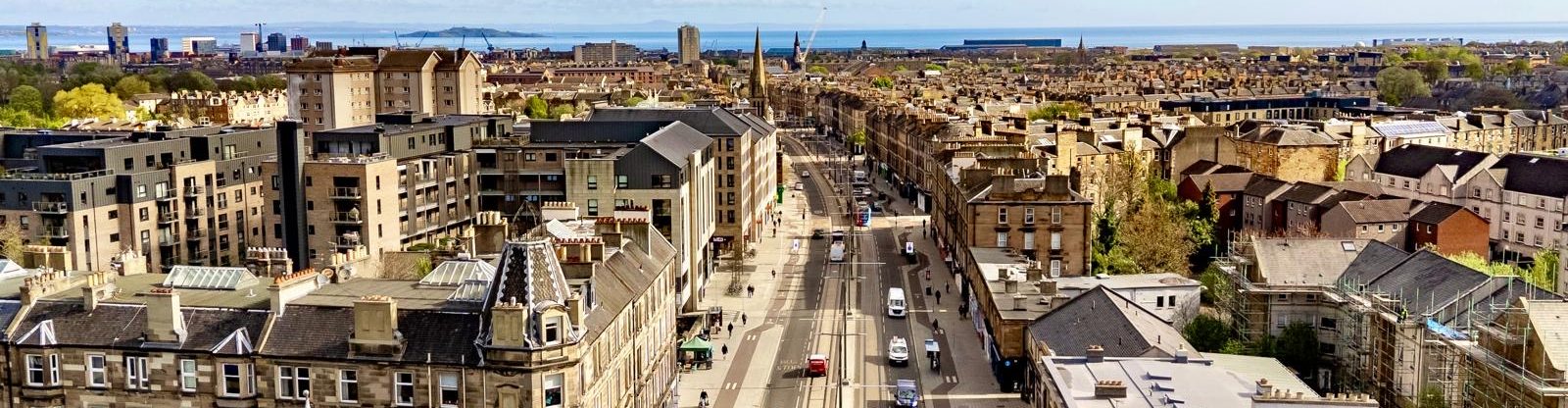
Leith Walk by night

With input from over 300 people and after a month of putting together a joint response for  the council’s Leith Improvement Progamme, eleven community organisations, including Leith Central CC, have joined forces with active travel campaign groups to demand that the council rethink its proposals for a multi-million pound facelift of Leith Walk and Constitution Street.

With this unprecedented joint submission all three Leith community councils, another three Leith-based community organisations, The Cockburn Association and four active travel organisations, the groups have teamed up  to persuade Edinburgh council to do more to boost the economic vitality of the area – by improving the public realm, and tackling the road safety and air pollution problems that affect the area.   The findings of last year’s Leith Links Gala consultations in which  hundreds of Leithers shared their priorities for the redevelopment of Leith Walk, were also included in the document.

Thanks to this unprecedented joining of forces there is now a single and unambiguous document that clearly sets out local priorities and aspirations for Leith Walk in detail.

While still in draft form, the document was available to anyone to comment on on-line, a unique process coordinated by local charity Greener Leith.

The full document runs to 42 pages and  aims to highlight improvements that the council could make to its current design proposals for Leith Walk and Constitution Street.  It is available online here: http://bit.ly/13tku4Y

Roland Reid, LCCC’s Secretary said “Leith Walk is not only one of Edinburgh’s top three streets, it is also the key artery running through one of the most densely populated areas in the city.  We are pleased to be part of this joint submission with so many other local and national organisations and hope that it will contribute to the revival of the vitality of Leith Walk that has suffered so much since the start of the tram works since 2007.

Some of the key points include:

  • A 20mph speed limit to be applied to the length of Leith Walk to boost road safety.
  • A complete redesign of many of the key junctions to make the street more pedestrian and cycle friendly.
  • A zero tolerance approach to managing bins and redundant signage to get rid of the street clutter that blights the street.
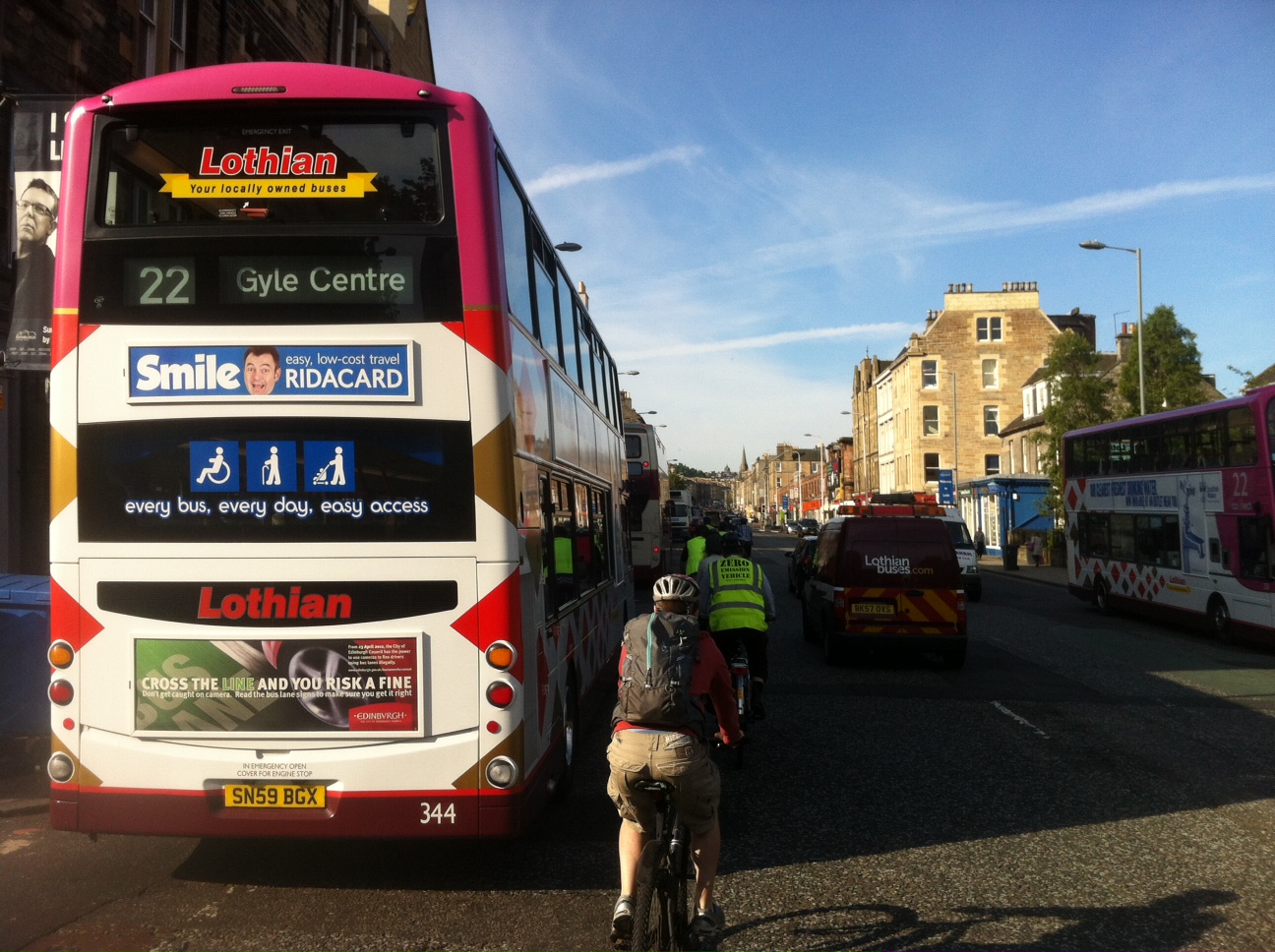
  • The installation of a protected bike lane on the full length of the southbound carriageway so that cyclists aren’t squeezed between buses and fast moving traffic as they travel uphill.
  • An overhaul of the parking arrangements on the street to encourage more people to shop on the street and put a stop to dangerous double parking.
  • The return of the “Elm Row pigeons” and a redesign of the public space at the Foot of the Walk.


Leith Walk Upgrade Consultation Response – Please Comment by Sunday Night

That there will be more road works on Leith Walk in the near future is a definite definite.  However, how the road will be modified is still the subject of a consultation that YOU can take part in.

This draft document

https://docs.google.com/document/d/14x4dmd7wCcDr5NHG9DuZDq2m-yeiVm0s6rMKT_Fs2uo/edit

has been modified over the past few weeks as dozens of people have made their comments about what they would like to see on Leith Walk. 

Please add yours, the document needs to be submitted by the end of Monday 13th January 2013.

Leith Walk Upgrade Consultation Response – please comment

At the last meeting of LCCC it was agreed to work together with Leith Business Association, Greener Leith and other organisations (hopefully Leith Links CC, the Pilmeny Centre and SPOKES) to come up with a response to the proposed designs for improvements to Leith Walk.

The draft plans have been out since the beginning of December and have been exhibited in Leith and MacDonald Road Library, where copies of the drawings are still available.  All the information is also available on the Council’s website.

http://www.edinburgh.gov.uk/info/20056/city_centre_and_leith_neighbourhood/1788/leith_programme_2012-2014/1

Over the holidays volunteers have been working hard to compile the Joint Comments to which everyone can add more comments  by following the link and using the blue button at the top right.  Please exercise your right to do so!

Edinburgh Council has already provided some answers to questions from locals here

In case you are unable to comment but would like to know the nature of the comments here is the executive summary of the 24 page document:

On 21 March 2012 at a public meeting in Lorne Primary School  Edinburgh City’s Design Leader, Ricardo Marini, told locals that Leith Walk was regarded as one of the top three roads in Edinburgh (after Princes Street and the Royal Mile).  Marini stressed it was essential to get the focus back on to people to improve the quality of life in the area.

We are all strongly supportive of this aspiration and are determined to change Leith Walk’s current function as a motorised transport corridor and put all our efforts into the creation of a successful ‘boulevard’ environment with a thriving local economy. Leith Walk’s improved infrastructure should provide a safe, healthy and clean environment for all users of the road.  The use of public and active transport should continue to be encouraged and that of other motorised transport restricted, not least to improve air quality.

With a revised layout of Leith Walk up for consultation, Edinburgh has a once-in-a-generation opportunity to create a civic space that conforms to the most up to date design principles and that has the potential to become a people-friendly destination in its own right.  Let’s not miss this unique opportunity.

Please find below a summary of our Comments:

Design Principles
With many recent local and national guidelines covering public realm design it would have been useful to see a definitive list of the policies and design principles that have informed the draft proposals for Leith Walk. In the absence of this, we highlight some of the wider considerations the council should be taking into account in such a large project.

Improved pedestrian and cyclists’ experience
Local consultation has shown repeatedly that there is wide support for a safer and more appealing walking and cycling environment.  We do not believe that the current proposals have exhausted all opportunities for achieving this.

We propose that a 20mph speed limit is applied to the length of Leith Walk. We also call on the council to redesign the major junctions to make them safer and more convenient for pedestrians and cyclists.

Too many people are wary of cycling in busy bus lanes. Our strong preference is for safer cycle lanes along the entire southbound (uphill) length of Leith Walk as our research# shows that only safe cycle lanes can meet local aspirations and drive the kind of modal transport switch that is needed if the city is to meet its own environmental targets.

Improving Air Quality
Parts of Leith Walk suffer some of the worst air pollution in Scotland, which has a severe impact on public health.  The council is already having to explore the prospect of charging some road users to enter into polluted areas in order to comply with environmental laws. As an alternative to this potential cost, which will have to be paid by local businesses and public transport users, we urge Edinburgh Council to make a firm commitment to invest in driving a modal shift toward walking and cycling on Leith Walk.

Parking and Loading
To give a boost to traders we would like to see parking and loading on Leith Walk managed with the aim of maximising visitors to Leith Walk. We would like to see regulated, ticketed and fully enforced parking, even if parking remains free of charge. We also call for some spaces to be moved in order to make room for more walking and cycling facilities.

Waste Management
Proposals to locate communal bins for domestic waste on the road, rather than the pavement, are welcome.  We would like the Council to consider using same strategy for commercial waste as well in order to cut pavement clutter which is a real problem for some people with disabilities and looks unsightly.  

Location of Greenery
We would like to see more specific proposals for new greenery and trees included in the improvement proposals for Leith Walk.

Signage for Leith Walk
To improve Leith Walk as a shopping and tourist destination we would like to see better signage towards Leith and on Leith Walk, emphasising it as a destination in its own right.  The recently re-instated Leith Flag should be prominent in the design. There is also a great deal of redundant or damaged signage that needs to removed or replaced.

Bus Stops
There is excellent public transport on Leith Walk the use of which we are keen to see further encouraged.  Where it concerns the design of the road itself buses should have priority over cars.  The road surface should be sufficiently load-bearing to accommodate the weight of fully loaded buses, especially at bus stops.

Car Club Spaces/ Electric Cars
Considering that over 50% of Leith households do not have a car, we would like to see a commitment to more provision for Edinburgh Car Club spaces on, or near, Leith Walk.  There should also be provision for electric car charging.

Management and Communication
There should be one person given overall responsibility for overseeing all the works on Leith Walk who should be easily contactable by the general public.  There should be a Works Office on Leith Walk to manage enquiries from the public, resolve problems and explain what is happening. There should be greater transparency during the consultation period.

***

NB. All comments will need to be submitted by the 13th of January, so please submit any feedback AS SOON AS POSSIBLE
Pilrig Conservation Area Proposal

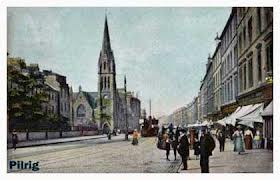
Pilrig Church

Recent planning legislation (Householder Permitted Development Rights) allows householders to make significant changes to their property without the need to seek planning permission unless the property is listed or is in a conservation area. Perhaps the most worrying part of this new legislation is that owners can also do anything they like to the front of their properties within a ‘bubble’ of 1 metre, which could particularly affect the appearance of Victorian tenements, colonies and terraced housing in the Pilrig area.  Because of these concerns members of the Planning Sub-Committe have written to the Council’s Planning Department to see if the area of Pilrig that is not already included in the Leith Conservation Area could form a separate ‘Pilrig Conservation Area.

Many hours of volunteer time have gone into writing a ‘Conservation Area Character Appraisal’ for Pilrig and we would like to thank Dr Annette O’Carroll in particular for her invaluable contribution to this project.  Below is the draft document which describes the many interesting historical features of Pilrig:

Draft (23_4_12)Pilrig Conservation Area Character Appraisal-1

If everything goes to plan the Council officers will report back around mid-February whether they think Pilrig is worthy of conservation status . This should be followed by a public exhibition in early March to evaluate whether the community is happy with these plans.

In case you are not familiar with the concept of a conservation area here is more information:

Conservation areas are areas of special architectural or historical importance.

There are over 600 conservation areas in Scotland. They can be historic land, battlefields, public parks, designed landscapes or railways but most commonly are groups of buildings extending over areas of a village, town or city. To safeguard them for the enjoyment and benefit of future generations any new development should preserve or enhance their varied character and there are additional controls over alterations to buildings and planning permission is required if such alterations are considered to affect the character of the area.

Are Trees included in a Conservation Area?

Trees that are within a conservation area are often protected.

Can I put up a satellite dish or replace my windows in a Conservation Area?

Living in a conservation area gives the home owner greater restrictions on alterations that can be made to their property and land. A planning application will be required for proposed alterations such as replacement window, walls, gates, sheds, porches, satellite dishes.  It is an offence to carry out works in a conservation area without planning permission. If you carry out works you may be asked to remove them.

Your local planning department or architectural service provider will be able to advise you if these restrictions are in place for your property.

What controls operate in a Conservation Area?

Conservation area consent is required for the demolition of any unlisted building in a Conservation Area (although certain very small buildings are exempt). The character or appearance of a Conservation Area through the demolition of a building and/or the construction of a new building can be significantly altered and lose some of the justification for its designation. Most buildings in a conservation area are part of the character and of the overall development of an area. Many of these will not be listed but alteration to them can have a significant impact on the rest of the area.  This means that most developments are likely to require a planning application and you are advised to check with the local authority before commencing any works. Any such planning application would usually require to include the following information:

1.    A detailed scheme for the redevelopment of the site;

2.    Details of the layout if it is to be retained as an open area;

3.    An indication of project timescale; and

4.    A structural engineer’s report when demolition is proposed.

Any planning application which is thought likely to alter the character of a Conservation Area must be advertised in the local press and a notice posted near the site. The local authority must then allow 21 days for objections and comments before determining the application.

All trees in a Conservation Area are protected from works including pruning, lopping or felling. They can make a significant contribution to the character of a Conservation Area. Before any work can be undertaken the Local Authority must be notified. On receipt of notification Edinburgh Council have six weeks in which to let you know whether formal permission is required for the proposed works.

Conservation Area Character Appraisals

Conservation Area Character Appraisals are usually created by the Local Authority. The Character Appraisal is a means of defining special qualities and architectural and historic interest. These are all characteristics which meant the area merited having Conservation Area status and the protection it can hold.

In conjunction with a range of other information such as statutory planning policy, detailed guidance at various levels and on occasion detailed site development briefs, a Character Appraisal can assist the management of development in a conservation area. These are sometimes also called a Conservation Area Management Plan.

All conservation areas are currently being reviewed on a rolling programme. If there is any doubt regarding the boundary of the conservation area please contact the Planning Officer.  Always check if you are unsure.

Image